Unit 06_ Visual Development : Character Design & Prop Design
- seobin051013
- 1월 20일
- 6분 분량

최종 수정일: 2월 5일
Character Design for Mary Poppins

The setting is mid-to-late 1960s London, known as "Swinging London" , yet simultaneously rife with young people's resentment and confusion towards family values rooted in gender, class, and patriarchy. This was intended to be visually conveyed through Mary Poppins' appearance, showing that she was no “ordinary being”.


In the initial design phase, Mary Poppins was conceived as a petite woman with the short haircut fashionable at the time. However, to further emphasize the confidence inherent in the character from the original novel and to present her as a figure challenging the female archetype shaped by gender roles and stereotypes, she was ultimately designed as a tall woman with a short haircut. Also, the pixie cut which is short hair with rough textures used to be trendy sensational hair in 1960s.


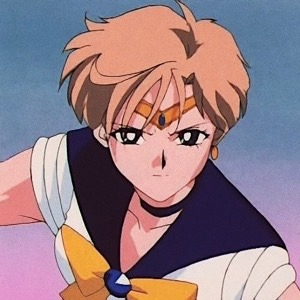


In designing the short-haired Mary Poppins, the main reference was made to Sailor Uranus , Haruka Tenoh from < Sailor Moon (1992 ) > , the one of the masterpieces 1990s Japanese animation. Within the series, she is the only Sailor Warrior with short hair and does not align with either masculinity or femininity. This design treats her position on the boundary, rather than a blend of identities, as her very identity. Her refusal to be fully assigned to either side makes her a unique character among the other female Sailor Warriors.
Viewed within its historical context, Uranus reflects the anxiety and liberation of a period following the collapse of Japanese bubble economy in the 1990s when established norms, including gender, were breaking down. This mirrors aspects of 1960s Britain, the era in which the Mary Poppins films were produced.
Based on the fashion styles popular at the time, a low-saturation red corduroy jacket was paired with a checked wrinkled pleated skirt.
Although it was an era where vivid primary colors like bright yellow, light green, and orange were widely used, from an adult's perspective reminiscing about the past, the colors were painted with lowered saturation, like a faded film photograph.
To express the corduroy texture, a halftone layer was utilized and turned it into 'Multiply' in Procreate, then make the opacity be lower to 30-40%.
Additionally, stockings or knee-high socks in various colors were fashionable at that time. To harmonize the colors, opaque ivory- white colored stockings were chosen. To match the eye color (Mary Poppins' eyes are blue in the original work too), the ribbon, earrings, and shoes were coordinated in navy blue.





Comparing these mages of Mary Poppins' design, the 5th one is the initial design and the 6th one is the final design with some changes. To be specific, the feedback indicated that the waistline of the jacket should not be emphasized as it is in contemporary women's jackets, and that the jacket length should be adjusted to fall to just above the hips, with the skirt either slightly covering the knees or stopping just above them.
Character Design for Bert

The era of " Swinging London " in 1960s, the boundary between the working class and the middle class still existed in spite of that there was the possibility of social mobility.
In the original work, Bert appears as a match seller, whilst in the film he appears as a chimney sweep. Like many professions, his occupation was one that changed form over time, or diminished or disappeared altogether.
Inspired by his habit of drawing chalk pictures on the pavement on clear days, there was an initial attempt to reimagine him as a graffiti artist. This coincided with the era when graffiti artists began emerging in the 1960s. However, unlike in America, graffiti was not yet a sensation in Britain at that time.
Consequently, Bert was reinterpreted as a theatre sign painter working in London's West End theatre district. The theatre painter in London during the mid-to-late 1960s existed as a commercial artist, yet it was a profession gradually fading away with the advent of photo-based printed posters and neon signs. In addition to this, Bert was reborn as an Irish immigrant/working-class artist who had no choice but to work as a commercial artist to make ends meet.
I wanted to reinterpret him as a character who compromises with reality in a slightly different way to Mary Poppins, yet simultaneously lives with the pure passion of an artist. While Bert's profession in the film hasn't vanished, other occupations have taken centre stage. I created this character, embodying the changes of the times, in my own unique way.


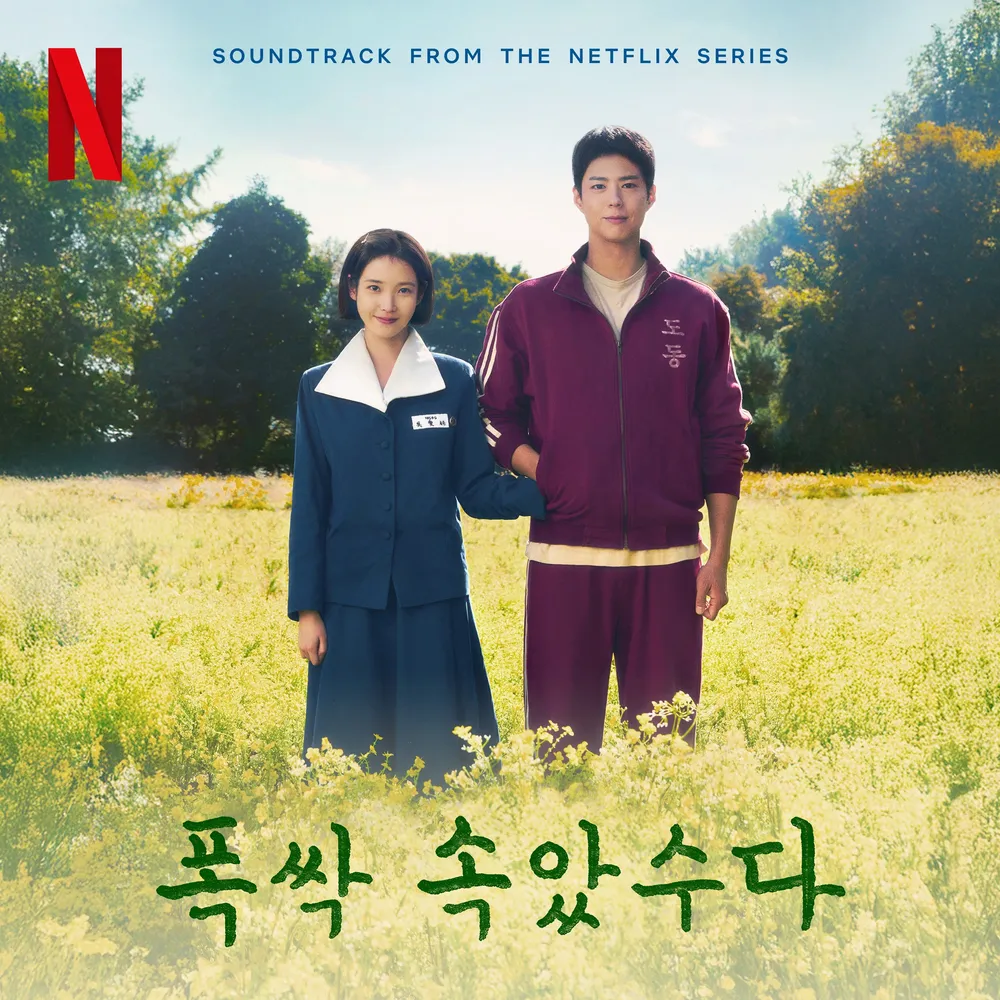
In case of this character, the main reference was Chug-seop, appearing in the Netflix Korean drama <When Life Gives You Tangerines> (2025), is a character who shares a significant connection with Geum-myeong within the drama. He serves not only to resolve events but also as a symbolic figure representing the anxieties and emotions of people navigating their era. His profession in the story is initially revealed as a sign painter working at a cinema.
This aspect served as the motif for his rebirth as Bert, a sign painter occasionally earning money in 1960s London's theatre district.


Furthermore, the designing Bert required more time to modify the clothes due to between the period and his job. To be specific, in case of this character, I also had been given the feedback about the material of his clothes is little bit different with the worker classes in 1960s.
So, I needed to modify the texture of the jacket and overalls. I had added the halftone layer which has darker color than base color on the jacket and overalls.
Prop Design _ Umbrella
As the most iconic item of Mary Poppins is well known for her umbrella, it was necessary to remake this prop.


Since Mary Poppins’ umbrella has been considered as the most iconic item of her, it was necessary to have prop designs including her umbrella, She had appeared and fled to Banks’ house with her unique umbrella on the early part of the film.
When she feels comfortable and happy, it has blue color with cloud patterns and even when she is happy and deeply content, a rainbow appears inside the umbrella; when she is with her beloved, it shifts from sky blue to pink. The reason the color inside the umbrella was chosen as pink when one is in a truly good mood stems directly from the emotional expressions associated with colors in English. The phrase “I feel pink” is an idiom used in contrast to “I feel blue” to express a state of feeling good, being in good health, or being in the best possible condition, hence the reflection of pink.
Conversely, when she feels sad or depressed, a pattern of rain falling against a grey background appears inside the umbrella, while when she is angry, a thunder-shaped pattern emerges. The reason the colors and patterns inside the umbrella when one is feeling low are depicted as grey skies and rainy weather is simple: Mary Poppins is set in Britain. Given Britain's climate, characterized by frequent showers, many Britons experience seasonal affective disorder (SAD) due to long, cloudy winters, frequent rain, and insufficient sunlight. Inspired by the impact of these climatic conditions, rainy days and overcast, dark skies were employed to symbolize a “depressed state”.

I added the feature to Mary Poppins' umbrella whereby the color and pattern on the inside of the umbrella changes according to her emotions. In Makoto Shinkai 's film < Weathering With You >, people's moods shift with the weather, and the character Hina possesses the ability to manipulate it. As with the aforementioned influence of weather on sentiment, the child of the weather likewise narrates the weather not merely as a metaphorical expression of emotion, but as a directly interconnected relationship.
Similarly, by applying this relationship between weather and emotion to Mary Poppins' umbrella, the film indirectly visualizes Mary Poppins' disposition: outwardly aloof yet inwardly warm and pure.
Prop Design _ Handbag

In case of Mary Poppins’ bag, among fashion items, women's handbags are among the most adept at reflecting the spirit of the times and evolving. Considering the presence of Mary Poppins, who ushers in a fantasy that expands reality rather than escaping it, the design combines the form of a “treasure chest” – featuring her mysterious objects like a mirror or tape measure – with a style ordinary women might carry.
During designing the bag, it was necessary to consider the fabric patterns on 1960s to reflect the historical verification. Thus, I added the checked pattern and the texture layers while drawing the picture of the handbag.


When Mary Poppins first met the Banks children and pulled a flowerpot, a mirror, and a tape measure from her bag, the scene where objects emerged regardless of their mass or volume reminded me of the Japanese children's cartoon < Doraemon >.
Doraemon, too, pulls wondrous and varied items from a pouch attached to his body like a kangaroo's pouch to solve the protagonist's problems and worries.
Furthermore, the world within that pouch is far more vast and expansive than it appears from the outside. In these respects, I thought it was similar to Mary Poppins's bag.


댓글